Ingredients
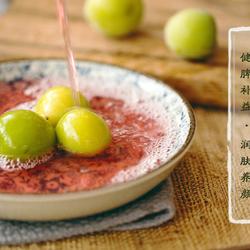
Green plum ( appropriate amount ) | High-quality rice wine with 41 degrees and above (appropriate amount) |
Poria (appropriate amount) | Dendrobium (appropriate amount ) |
Rock sugar ( appropriate amount ) | Zhigancao (appropriate amount) |
Dried perilla leaves ( appropriate amount ) |
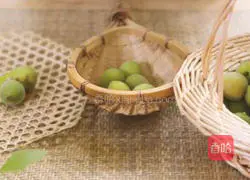
1. Remove the damaged and moldy parts of green plums and soak them in salt water for half an hour.Afterwards, rinse the plums with running water for one hour to remove the astringency, and then dry them naturally in the shade until no moisture remains
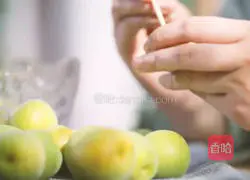 2. Remove the stems of green plums to make the wine less astringent, and poke some small holes in the skin to facilitate the juice seepage during soaking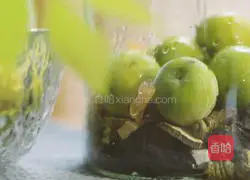
3.Put poria, dendrobium, licorice and dried perilla leaves on the bottom and put them on the bottom Add a layer of green plums and a layer of rock sugar, then pour some rice wine
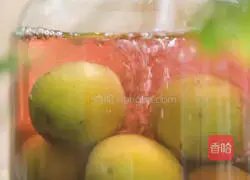
4.After a few days of rock sugar melting, spread the second layer of green plums and rock sugar, then pour in rice wine, repeat this step two to three times, until all the green plums, rock sugar, and rice wine are put into the jar, seal it and place it Store in an opaque place for one month to one year before drinking
Tips
1.Add the next layer of green plums, rock sugar, and rice wine every few days because the fresh green plums need to be wrapped with the flavor of the fermented green plums.The taste will be more layered.
2.If the alcoholic content of the wine used to soak green plums is too low, it will be difficult to preserve.However, if you drink too much high-quality white wine, you will get drunk, so high-quality rice wine is the most suitable.
3.White porcelain containers are preferred for brewing wine for three reasons.
Firstly, porcelain is delicate, opaque and has good sealing, which does not affect the taste of wine;
Secondly, porcelain is earthy and is consistent with the nature of the human spleen;
Thirdly , trace elements such as calcium, magnesium, potassium, sodium, and iron in porcelain will dissolve in the wine during long-term soaking, promoting the aging of the wine and making the wine more mellow and fragrant.
4.Glass containers can also be used for soaking wine, which are stable and easy to observe the state of the wine, but be careful to avoid light and seal.
Copyright Statement:This article is a reprinted article, and the copyright belongs to the original author. Please retain the source when reprinting!