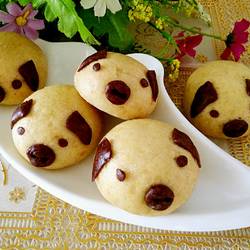
Ingredients
White dough: whole wheat flour ( 200g ) | White flour ( 300g ) |
Yeast powder ( 5-8 grams ) | Warm water (about 35 degrees) ( 250-275g ) |
Black dough: black rice flour ( 50g ) | White flour ( 200g ) |
Yeast powder ( 3 grams ) | Warm water ( 130g ) |
How to make whole wheat pork buns

1. Mix whole wheat flour, flour and yeast powder and set aside.
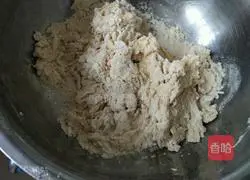
2.Mix the flour evenly, add warm water, and knead into a spike shape
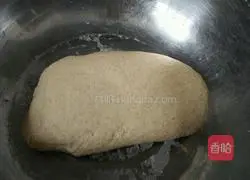
3.Then knead into a smooth dough and let it rest for 30 minutes
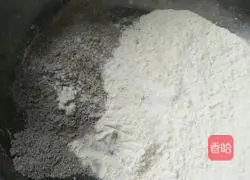
4.Mix the black rice flour for eyes, nose and ears, black rice white flour and yeast powder evenly.
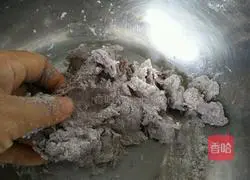
5.Add appropriate amount of warm water and stir into dough spikes
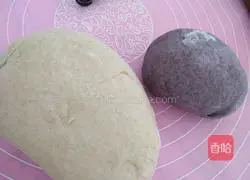
6. Let the two doughs rise for 30 minutes respectively

7.Wake up the whole wheat flour dough and knead it evenly.Make the body of the piglet, as shown in the picture.
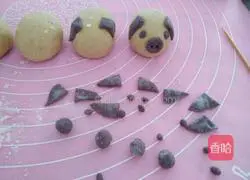
8.Then the black dough has risen, knead it evenly again, and put the piggy ears Make the nose and eyes as shown in the picture.
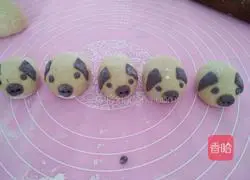
9.The completed eyes, nose and ears are made into small ones as in the picture The appearance of a pig is not cute.
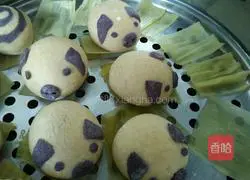
10. Let the prepared piglets wake up for about 10 minutes, then put them on cold water pot and steam for 30 minutes.
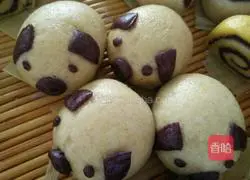
11.After 30 minutes, turn off the heat and simmer for a minute or two, then take it out
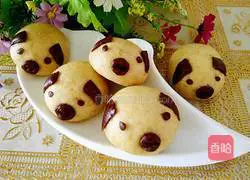
12.After cooling slightly, put it on a plate and serve it.Children will definitely like it, and it is whole wheat.Yeah, it’s nutritionally complete!
Tips
The main steps for this piglet bun are mixing and proofing the noodles.I have already mentioned this in my pasta recipes, which is: one pound of noodles, half a pound of water, five grams of yeast powder, and then, use 35 Use warm water to make the noodles, ensuring that they will form a honeycomb shape within half an hour.When steaming the pig buns, be sure to use cold water in the pot.Steam for 20 minutes, then turn off the heat and simmer for a minute or two.This way, the noodles are steamed The piggy is chubby and cute.
Copyright Statement:This article is a reprinted article, and the copyright belongs to the original author. Please retain the source when reprinting!