Health benefits
White radish: reduce phlegm
Ingredients
Pig front feet ( 500g ) | White radish ( 500g span> ) |
Salt ( appropriate amount ) | Ginger ( 20g ) |
Wolfberry ( 10g ) | White rice vinegar ( 10g ) |
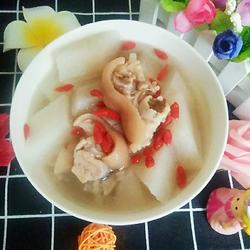
How to make pig's feet stewed with radish
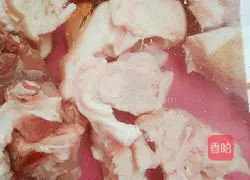
1. Put the fresh pig front legs (which have been processed and cut in the supermarket) into a basin and soak them in cold water for three to four hours, changing the water halfway.
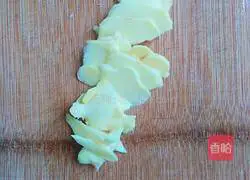
2. Slice the ginger.

3.Soak the pig's feet, clean them, add water to the pot, and add three slices of ginger , cooking wine, blanch in water.

4.The blanch time is 5 minutes from turning on to turning off the heat.
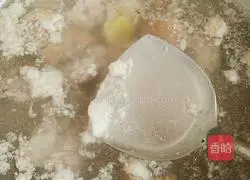
5. During the blanching process, skim off the floating foam on the top.

6. Then rinse it with running water and put it into the inner pot of the electric pressure cooker.

7.Peel the white radish!

8. Cut into rhombus-shaped slices.Don’t cut too thin.Cut thicker, about 1.5cm thick..

9.Also put into the pressure cooker.

10.Add all the remaining ginger slices

11.Add 10g of white rice vinegar.

12.Add two vegetable bowls of water, about 1 liter of water.

13. That is, just enough to cover the ingredients.

14. Then press the tendon key and then the start key to make soup!
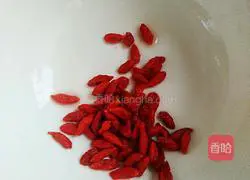
15.Wash the wolfberries

16. After the pot cooks until the beep sounds, add wolfberry and salt when you can uncover it, then cover it and keep it warm for half an hour.

17. The soup is light and not greasy, and the pig's feet are soft and tender.eat! Full of collagen!
Tips
1: Pig's trotters have a lot of grease.Soaking them in water and rinsing them frequently can reduce the greasiness.
2: If you like chili peppers, you can add dried chili peppers and stew them together.(I haven’t added chili pepper for many years in Guangdong now)
3: If it’s too bland, you can make your own sauce and eat it with meat.(Just a little soy sauce, crushed millet, pepper, and crushed garlic and mix well).
4: More people can increase the amount of food.
Copyright Statement:This article is a reprinted article, and the copyright belongs to the original author. Please retain the source when reprinting!