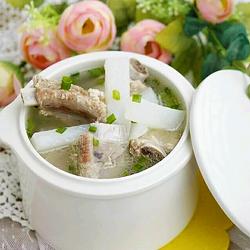
Health effects
White radish: reduce phlegm
Spare ribs: maintain healthy skin and mucous membranes
Ginger: reduce phlegm and relieve cough , dissipate cold and relieve symptoms
Ingredients
White radish ( appropriate amount ) | Pork ribs (appropriate amount) |
Ginger ( 2 pieces ) | Green onion ( 3 paragraphs ) |
Cooking wine ( 2 spoons ) | Salt ( appropriate amount ) |
Chicken essence (appropriate amount) | White pepper ( optional ) |
White sugar ( a little ) |
How to make white radish and pork ribs soup
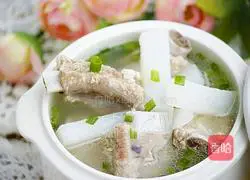
1.Picture of finished product.
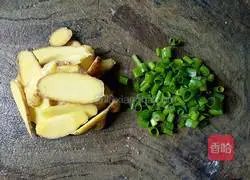
2. Peel and slice the ginger, and cut the scallion into white sections.

3. Wash the ribs, add a few slices of ginger and 1 spoon of cooking wine, put the pot in cold water over high heat After boiling, cook for 3 minutes.
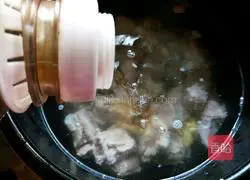
4. Rinse the blanched ribs with clean water to remove the blood-stained bubbles and pour them into the pressure cooker , pour an appropriate amount of water, add the remaining ginger slices, 1 spoon of cooking wine, and a little sugar.

5.Select soup, start the electric pressure cooker and cook for 25 minutes.
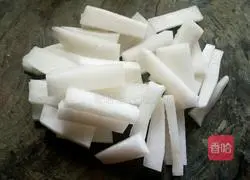
6.Use the time of cooking the ribs to peel, wash and cut the white radish into pieces.Good sized chunks.
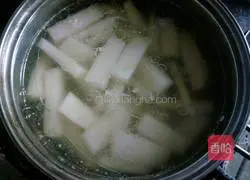
7.When the ribs are cooked, add the chopped white radish, cover and cook again Leave it for ten minutes until the radish is cooked through.(Here I pour the cooked pork rib soup into a small pot and cook it on a gas stove.Because the radish itself is easy to cook, I don’t use a pressure cooker.)
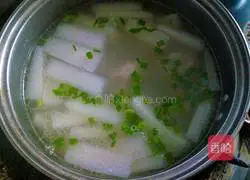 8.Sprinkle with salt, chicken essence and white pepper to taste, sprinkle with chopped green onion or coriander and serve.
9.The cool and refreshing white radish pork ribs soup is ready to eat!
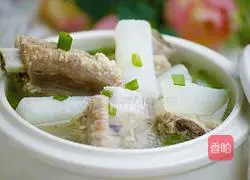
10. Close up.
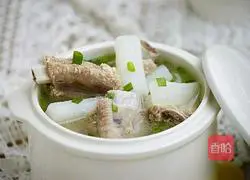
11. Close up.
Tips
It is best to blanch the ribs first, so that the blood and dirt can be removed.The soup will not only have no fishy smell, but also have a clear color.
When making soup, it is best to add enough water at once, because adding water in the middle will suddenly lower the temperature of the soup, causing the protein in the ribs to suddenly solidify and no longer fully dissolve in the soup, which will damage the deliciousness of the soup.
In addition, the salt should not be added too early, because the salt will penetrate into the internal tissue of the meat too early, which will accelerate the coagulation of the protein and affect the delicious taste of the soup.
Copyright Statement:This article is a reprinted article, and the copyright belongs to the original author. Please retain the source when reprinting!