Health benefits
Eggs: nourish blood
Butter: activate blood circulation and remove blood stasis
Ingredients
High-gluten flour ( 80g ) | Low-gluten flour ( 20g ) |
Fine sugar ( 18g ) | Honey ( 5g ) |
Milk powder ( 9 grams ) | |
Eggs ( 12g ) | Butter ( 15g ) |
Yeast ( 1.25ml ) | Salt ( 1g ) |
How to make milk-flavored buns

1.Follow the general bread making process, mix all the ingredients except butter and knead into dough.Knead vigorously until the dough becomes smooth and elastic.This is a relatively hard dough.

2. When the dough is stretched and not easy to break, add softened butter and continue Knead vigorously until the dough can be stretched out into a thin film (expansion stage).

3. Cover the kneaded dough with plastic wrap or damp cloth and let it rise at room temperature for 15 minute.

4. Use a rolling pin to roll out the risen dough into a thin rectangular sheet..

5. Roll up the dough from one end, making sure to roll it tightly.

6. Roll the dough into a long strip.If the rolled strip is not thin enough, use both hands to roll the dough out on the counter until it becomes a thin strip of even thickness.

7. Cut the long strip into 8 small strips.

8. Place the cut strips on the baking sheet.Carry out final fermentation at a humidity of 75% and a temperature of 35°C (if there are no fermentation conditions, place the baking pan with the dough in the upper layer of the oven, and place a baking tray with hot water in the lower layer of the oven, close the oven door for fermentation ).
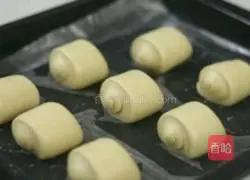
9. It takes about 2-3 hours to ferment until it becomes the original shape 2 times as big.

10. Preheat the oven to 170°C and place the baking pan in Preheat the oven, second level from the bottom.Bake for about 12 minutes, until the surface is golden brown.

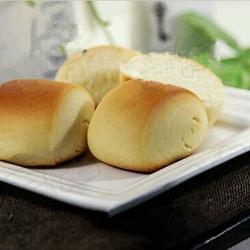
11.Finished product!
Tips
1.When baking this bun, use different temperatures for the upper and lower heat.Place it on the lower side so that there is enough space on the top to ensure even coloring on the surface.If your oven cannot control the temperature of the upper and lower heat separately, set the temperature to 170°C and bake on the middle shelf of the oven.
2.If compared with the general bread making process, you will find that this bread does not undergo basic fermentation, but the final fermentation time is more than doubled.The amount of dry yeast for bread is less, and the final fermentation time may vary greatly depending on the temperature.It is enough to ferment until it is about 2 times in size.
3.This is a relatively hard dough.It may take a little more effort to reach the expansion stage when kneading the dough.
Copyright Statement:This article is a reprinted article, and the copyright belongs to the original author. Please retain the source when reprinting!