Ingredients
Flour ( ) | Yeast ( ) |
Milk ( ) | Baking soda ( ) |
White sugar ( ) |
How to make white rose rolls
1. Dilute the yeast with warm water, add warm milk, sugar and warm water and knead the flour into a smooth dough! Put it in a pot and seal it with a plastic bag.Leave it in a sunny place for two hours!
2.Two hours later...
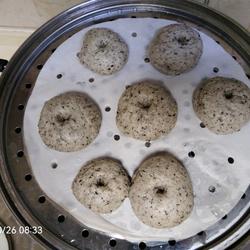
3.The risen noodles are twice as big ~ a hornet’s nest appears
4. Add a little baking soda to the risen dough and knead it! Divide into six pieces, roll them out into skins, place the five skins one by one and use chopsticks to make a mark! Roll up one of the skins to make a flower center.
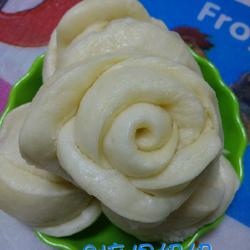
5.Put the flower at the end~
6.Slowly roll up from the end~
8.Out of the shape, send filial piety for the second time, place the flower roll slowly It becomes fluffy slowly~
9.This is an hour later...
10. Put cold water in a pot over high heat and then quickly turn to medium heat and steam for 15 seconds Just minutes! Or 20 minutes from the time of firing!
11. Turn off the heat and then start the pot three minutes later!
7. Just cut it in the middle with a knife, and then organize it!
Tips
Use milk, white sugar and warm water to make the dough rise quickly and the dough is still soft, Xuan! Hanaki noodles must be softer than steamed buns! You don’t need to add baking soda.Personally, I feel that adding some will remove the smell of yeast.If you want to eat fluffy Xuanxuan Hanamaki, I have steamed it many times.The final conclusion is that the skin should not be thin.The second fermentation is the most important.Don’t watch it.Time~see if the flower roll is bigger than when it was first made~it feels like a flower has bloomed! Also, don’t roll it too tightly during the rolling process.When steaming, be careful not to spill steam water on the rolls.That will cause them to die.Don’t open the lid immediately after opening the pot, otherwise the rolls will shrink due to the large difference between hot and cold! This is my personal summary of experience to share with you!
Copyright Statement:This article is a reprinted article, and the copyright belongs to the original author. Please retain the source when reprinting!